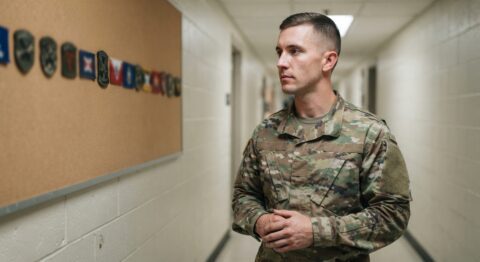
Every year, camouflage uniforms march through one of the world’s biggest Pride parades, and behind that image is a real organization that’s spent over two decades building genuine institutional support for LGBTQ+ members of the Australian Defence Force — a history that started years before anyone was marching anywhere in uniform.
Founded in 2002, more than a decade before the parade
The Defence LGBTI Information Service — DEFGLIS — traces its founding back to 2002, and formally incorporated as a registered charity in 2014. That timeline matters: DEFGLIS existed as a volunteer-run support network for eleven years before the ADF ever formally permitted members to march in uniform at Sydney’s Gay and Lesbian Mardi Gras, which only became possible in 2013. The organization’s early work happened almost entirely out of public view — a network of volunteer state-based advisers providing peer support, referrals, and guidance to LGBTI personnel and their commanders, built long before any public celebration of it was possible.
What DEFGLIS actually does, beyond the parade
DEFGLIS is volunteer-led and volunteer-operated, but works in close, formal coordination with the ADF itself. Its core functions include peer support for currently serving LGBTI members, referrals to community-based support services, direct advice to commanders and unit managers on sexual orientation and gender identity matters, and formal representation of LGBTI personnel in Defence policy discussions. The organization maintains a network of volunteer advisers assigned by state, each connected to local community organizations capable of providing specialist support that a national office alone couldn’t offer to someone stationed hundreds of miles from a major city. It’s a genuine advisory and welfare structure, not a purely symbolic or ceremonial organization — the Mardi Gras march is the most visible part of DEFGLIS’s work, not the whole of it.
2024: uniforms in the parade, and a real voice behind them
At the 2024 Sydney Gay and Lesbian Mardi Gras, roughly 90 ADF members, Defence public servants, and DEFGLIS representatives marched together — joined publicly by Assistant Defence Minister Matt Thistlethwaite and the Senior Enlisted Adviser to the Chief of the Defence Force, Warrant Officer Ken Robertson. That’s not a token appearance; it’s senior defence leadership showing up alongside serving members in camouflage, in one of the most visible LGBTQ+ public events in the country.
A voice from inside the march
DEFGLIS Vice-President Flight Lieutenant Nathan Howarth spoke directly about what the moment meant to him: being able to demonstrate his pride as an openly gay service member, with the Australian public actually seeing what he does for a living. That’s a specific, personal kind of visibility — not an abstract policy win, but a real officer, in uniform, choosing to be seen on a day built around exactly that, more than two decades after the organization supporting him first started operating quietly in the background.
Real institutional support, not just an annual appearance
Beyond Mardi Gras, the ADF supports other LGBTQ+ visibility initiatives, including Wear It Purple Day — an Australian-founded observance started in 2010 by students Katherine Hudson and Scott Williams, created in direct response to a wave of LGBTQ+ youth suicides that made international headlines that year. It’s grown from a grassroots student initiative into an internationally observed day, and Defence’s participation in it sits alongside sending defence force recruiting representation to major LGBTQ+ events throughout the year — a sustained institutional presence rather than a single symbolic march. Dedicated LGBTQ+ advisory roles within Defence give members a formal channel that didn’t exist a generation ago.
Progress that isn’t uncontested
None of this has happened without friction. Conservative political pushback against the ADF’s support for transgender and non-binary members specifically has been a real, ongoing tension in recent years — a reminder that institutional visibility, even when it’s genuine, doesn’t mean every part of the conversation has settled. DEFGLIS and its members continue that work in a climate that isn’t uniformly supportive, even as the institutional gains remain real.
What this means for the broader picture
Australia lifted its ban on gay and lesbian military service earliest of any major English-speaking country, back in 1992. DEFGLIS’s own history — quietly organizing from 2002, incorporating formally in 2014, marching openly since 2013 — is the modern, visible continuation of that head start, built patiently over more than two decades rather than arriving all at once.