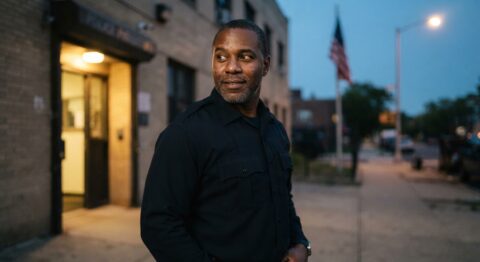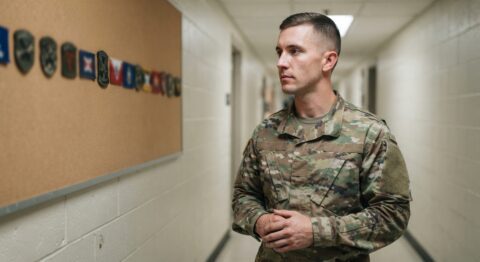
For decades, being gay or lesbian in the Canadian military, the RCMP, or the federal public service didn’t just mean staying quiet — it meant being actively hunted, investigated, and removed. What’s now known as Canada’s “gay purge” is one of the most extensively documented episodes of state-run discrimination against LGBTQ+ people anywhere, and it ended with one of the most direct government apologies on record.
Decades of systematic investigation
Starting in the 1950s and continuing through to the early 1990s, the Canadian government ran a sustained campaign to identify and remove suspected gay and lesbian members from the military, the Royal Canadian Mounted Police, and the wider federal public service. This wasn’t informal prejudice playing out case by case — it was organized, resourced, and treated as a matter of national security policy for close to forty years.
The “fruit machine”: pseudo-science deployed as policy
One of the purge’s most notorious tools was a device researchers nicknamed the “fruit machine” — developed in the early 1960s by Frank Robert Wake, a psychology professor at Carleton University whom the government had specifically sent to the United States to study existing detection methods before he built his own. Wake’s device measured pupil dilation and used an early lie-detector setup to track a subject’s pulse and perspiration while he was shown erotic imagery and specific words, on the theory that involuntary physical responses would reveal his orientation. The apparatus itself reportedly resembled a dentist’s chair positioned in front of a camera mounted on a pulley. It was used as part of the government’s official “Special Project” roughly between 1960 and 1964, and it never actually worked as a reliable detection method — but its existence captures just how far the government was willing to go, dressing discrimination up in the language of scientific legitimacy to justify what amounted to a witch hunt.
The human cost
People caught up in the purge lost careers they’d built over years, were often interrogated aggressively about their personal lives, and in many cases had their lives upended entirely — dismissed, demoted, or forced out under circumstances designed to be humiliating as much as exclusionary. The psychological toll on people investigated, whether or not they were ultimately dismissed, has been documented extensively in the years since, as survivors came forward once it became safer to speak. In total, the campaign is estimated to have affected roughly 9,000 people across the RCMP, the Canadian Armed Forces, External Affairs, and other federal departments combined.
The 2017 apology
On November 28, 2017, Prime Minister Justin Trudeau stood in the House of Commons and delivered a formal, direct apology for the purge — acknowledging it as a real, sustained campaign of state harm rather than a vague historical unpleasantness. The apology came alongside a legal settlement estimated to affect approximately 9,000 people, with compensation exceeding $100 million allocated to survivors.
Why the apology mattered as much as the money
Financial compensation is significant, but for a lot of survivors, the public, formal acknowledgment carried its own separate weight — a government stating clearly, on the record, that what happened to them was wrong, not a regrettable footnote. That kind of direct reckoning remains rare internationally; a lot of countries with comparable histories of institutional discrimination have never issued anything as formal or as specific, and few have gone as far as naming the specific pseudo-scientific tools used to carry it out. The purge has since become part of Canada’s documented cultural memory rather than a buried footnote — a 2018 documentary titled, fittingly, “The Fruit Machine,” brought survivor testimony to a wider audience and is now used in Canadian classrooms and public screenings to teach a chapter of history that, for decades, the government itself worked to keep hidden.
What it means for Canadian service members today
Canada’s ban on openly gay and lesbian military service formally ended in 1992, but the purge’s full history, including a device built specifically to hunt people down by measuring their eyes, and the 2017 apology that followed it, adds real context that a bare policy timeline misses. A Canadian veteran who served through or just after that era carries a genuinely different history than someone who joined more recently — and understanding that history is part of understanding the men you might meet through gay military dating from Canada specifically.